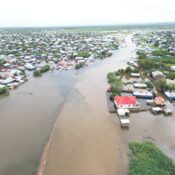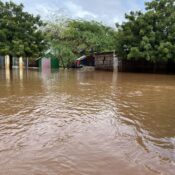
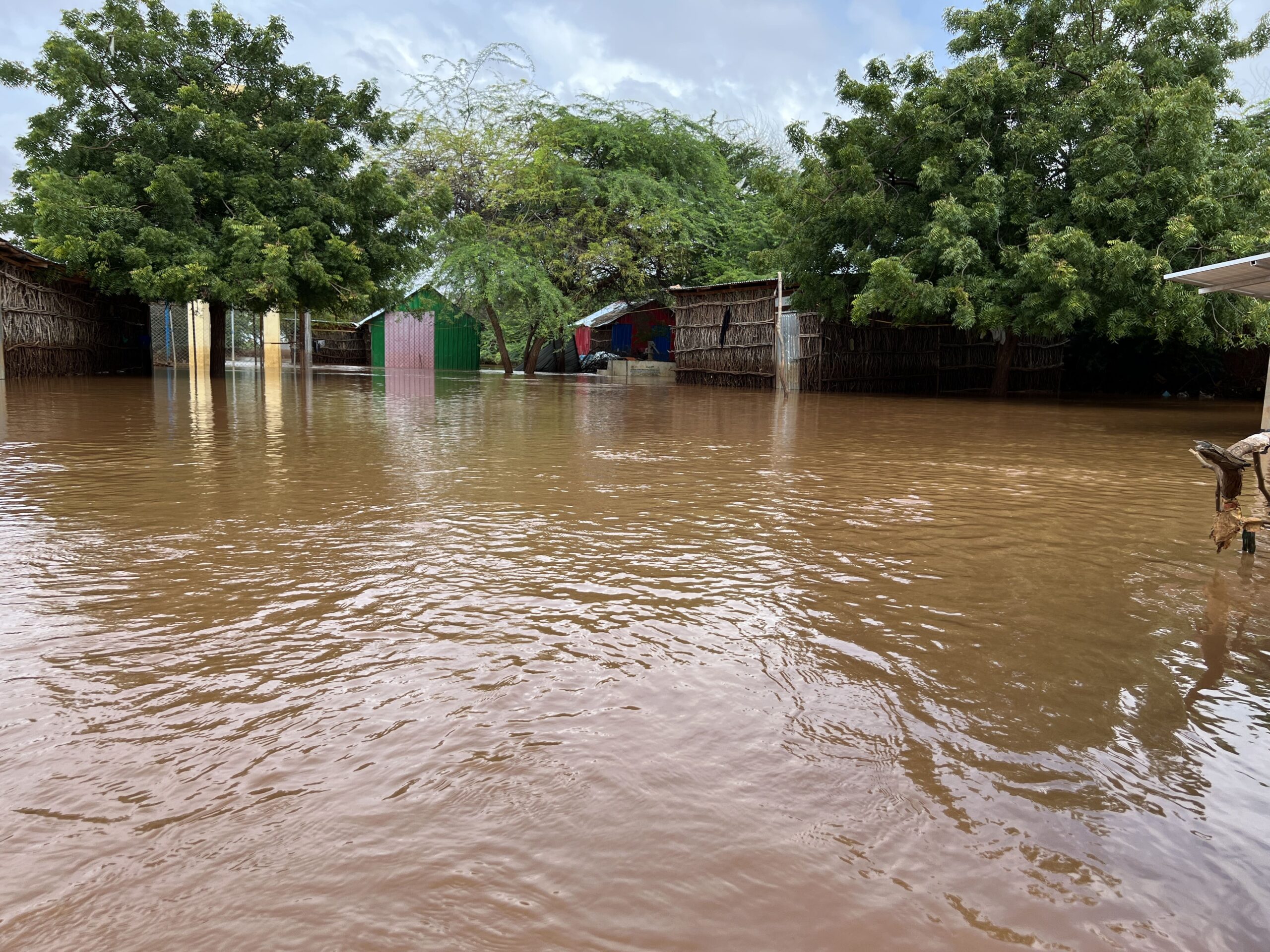
For years, the story of climate change in Somalia has been told through dry riverbeds and dying livestock. This season, the story flips. Forecasters across the region are now warning of the opposite extreme: a strong El Niño is developing in the Pacific, paired with a positive Indian Ocean Dipole, and together they are expected to bring a wetter-than-normal Deyr season to Somalia between October and December. Parts of central and southern Somalia have a very high likelihood of heavy rainfall, with some areas expected to see totals exceeding 400mm. Regional climate scientists are already pointing to 1997 and 2023 as the closest comparisons — both years remembered for the severe flooding that followed.
For communities already stretched thin by consecutive droughts, that is not simply good news. Ground hardened by years of dryness doesn’t absorb heavy rain well; it sheds it, fast, into flash floods. Riverine communities along the Jubba and Shabelle are especially exposed, and forecasters are warning of a credible risk of major flooding in those corridors if the season plays out as expected. The same rains that could finally replenish wells and pasture can just as easily destroy the crops, homes, and roads that stand in their path.
This is the paradox at the heart of Somalia’s climate reality: the crisis rarely arrives as one kind of disaster. It swings — drought to flood, scarcity to excess — often within the same year, testing communities from both directions.

A Climate That No Longer Keeps Its Old Rhythm
For generations, Somali pastoral and agro-pastoral life was built around a predictable calendar: the gu and deyr rains, the movement of herds along known routes, the planting seasons timed to the sky. That rhythm has come undone. Seasons now swing between prolonged dry spells and sudden, intense rainfall — sometimes within the same year. An El Niño season like the one forecast for late 2026 is a sharp reminder of just how fast the pendulum can swing, and how little room communities have to recover between shocks.
Livestock, the backbone of rural livelihoods, bear the brunt either way. Drought weakens or kills herds slowly; flash floods can wipe them out in a single night, along with the savings, dowries, and school fees that depend on them. Whichever extreme arrives, it’s the same families absorbing the shock, often before they’ve recovered from the last one.
Resilience Is Not a Buzzword Here — It’s a Daily Practice
It would be easy to tell this story only as loss. But spend time in the communities PHASE supports and a different picture also emerges: people are not simply waiting for the next drought to break them. They are adapting, often with very little outside help, drawing on knowledge passed down for generations and combining it with new tools and information.
A few of the adaptations taking root:
- Diversified livelihoods. Families once dependent solely on livestock are adding small-scale trade, poultry, or drought-tolerant crops to spread their risk, so one bad season doesn’t mean total loss.
- Water as shared infrastructure — built to handle too much, not just too little. Community-managed water points and catchments are being rehabilitated with an eye to both ends of the extreme: storage for dry months, and drainage or flood-resistant siting ahead of a season like this one.
- Early warning, community-style. Long before formal alerts arrive, elders and local committees read the signs — grazing conditions, river levels, animal health — and adjust movement and stocking decisions accordingly. With a strong El Niño forecast, linking this local knowledge to formal flood early-warning and evacuation planning is more urgent than ever.
- Land governance that protects the commons. Secure and fairly managed access to grazing land and water reduces the resource conflicts that climate stress so easily inflames, especially between settled and mobile communities — and matters just as much when floods force sudden movement as when drought does.
- Education that doesn’t stop when families move. Where displacement disrupts schooling — whether families are fleeing drought or fleeing rising water — flexible and community-based learning options keep children, especially girls, connected to education even as households adapt their movement patterns.
None of these are silver bullets. Each is a small hedge against an increasingly unpredictable climate — and together, they are what resilience actually looks like on the ground: not a single dramatic intervention, but many small, sustained adjustments, made by people who understand their environment better than anyone arriving from outside ever could.
Why Adaptation Has to Be Local
A recurring lesson from Somalia’s climate response is this: solutions designed far from the communities they’re meant to serve rarely fit. A borehole placed without consulting grazing patterns can sit unused. A drought-response plan that ignores customary land governance can deepen tension rather than ease it. Real resilience is built when communities are treated as decision-makers, not just recipients — when local knowledge about rainfall patterns, grazing corridors, and social trust is placed on equal footing with technical expertise.
That is the thread running through PHASE’s approach: working with communities, local leaders, and partners to strengthen what already exists — water systems, land governance structures, health and education access — rather than replacing them, so that resilience is something communities own, not something delivered to them.
The Season Ahead
With El Niño strengthening and a wetter Deyr season on the horizon, the coming months are a test of anticipatory action as much as long-term adaptation. That means acting now, before the rains peak: clearing drainage, pre-positioning supplies, reinforcing riverbanks and shelters in known flood corridors, and making sure early-warning messages reach the households most at risk — not after water is already rising.
Climate change in Somalia is not a problem that will be solved by any single season, wet or dry. It will keep testing communities in the years ahead, and the response has to be built for the long term: stronger water infrastructure, fairer land governance, education systems flexible enough to follow displaced families, and livelihoods diverse enough to absorb a bad year — of either kind — without collapsing entirely.
The communities we work with are not waiting for someone else to solve this. They are adapting every season, with limited resources and enormous resolve. Our role — and the role of everyone working alongside them — is to match that resolve with sustained, community-led support, especially as this El Niño season approaches.
PHASE continues to work with communities across Somalia to strengthen resilience to climate shocks, including anticipatory action ahead of this year’s El Niño season. If you’d like to learn more about our work or support these efforts, get in touch with our team.